Thursday, June 25, 2015

Mimi Dietrich Interveiw - 2015 TQHF Honoree


The Baltimore Quilt Revival started in Maryland and Mimi Dietrich played a large part in it. With her encouragement, her students formed the Baltimore Applique Society, a group that has promoted Baltimore Album quilts and raised money donated to museums to restore and display the quilts of this style.” AQSG member Phyllis Hatcher Twigg 


Quilting with Mimi Dietrich

Interview by Karen B. Alexander

It's hard to realize just how many years have passed since the exhibit "Baltimore Album Quilts"  debuted, first at the Museum of Fine Arts in Houston, Texas (November 18, 1980 - January 11, 1981); then The Metropolitan Museum of Fine Art, New York ( June 30 - August 30, 1981) and finally at the Baltimore Museum of Art (December 13, 1981 - February 7, 1982).  The Baltimore Museum of Art published its catalogue of the exhibit under the same title, Baltimore Album Quilts. The exhibit and book were produced by Dena Katzenburg(If you are lucky, you may be able to find a copy for less than $75.00.)


The first person to research and document this particular style of quilt was male and 
among the first 5 people inducted into The Quilters Hall of Fame in 1979 - 
Dr. William Rush Dunton of Baltimore.


The Honorees of The Quilters Hall of Fame are an amazing group of people, yet they are each unique as individuals. I like to attempt to present more than one side of an Honoree when I research and write about them. Doing a live interview offers me this opportunity. 

An oral interview is “in the moment” and though questions are prepared ahead, one never knows where an interview will actually go if you let it remain spontaneous. Mimi Dietrich is a joyful person and I hope the interview reflects that. In a future article about Mimi, I hope to share more about her endeavors for she is indeed one very accomplished woman!  So on with the Show! 


 Quilting with Mimi Dietrich


Mimi, how and when did you become interested in quilting?

When I graduated from college, I became a middle school teacher. In 1972, I discovered a store called Stretch and Sew and decided to quit my real job and go to work there. It was the best decision I ever made.  We were trained in some incredible sewing techniques with stretch fabrics. The owner, Vicki Drammis, taught me so much more than basic sewing: how to teach adults, how to adjust pattern sizes, and even marketing skills. While I was working there, three of us became pregnant at the same time, and we decided we would make quilts.  I had never made one before but thought “If they can do it, I can do it.”  That was 1974.  One made a Hawaiian quilt, one made a patchwork quilt, and I made an applique quilt, Sunbonnet Sue and Bill. 

I went for quilts with “things” on them, rather than abstract designs.  I was influenced by some of the magazines on the market at the time.  Good Housekeeping comes to mind.  I found Sunbonnet Sue there, and I really wanted a little girl, but I had to put the boy figures on, too, since I didn’t know if the baby I was expecting was boy or girl.


Did your mother or other family members get you started in textile arts?

My great grandmother made quilts in the 1930s for my mom’s family.  There were 8 children in my mom’s family and each had a quilt made for them.  My Mom's quilt was a Dresden Plate and I slept under it growing up.  I remember picking apart some of the stitches, wondering how they were made.  Mom embroidered, but she did not quilt.  The lady next door sewed and she really got me started in sewing.


My 16-year old niece and 10-year old granddaughter are friends with the 13 and 16-year old next door, and they are all learning how to sew from “Grammy”.  Now they can all reach the foot pedal, but at the beginning, my Bernina has a neat button that let them sew without the pedal. They love it!


What was the next step toward your teaching?

I tried to stay working at Stretch and Sell, but it didn’t work out.  After having children, I decided I couldn’t be a full-time employee.  But I did have some other jobs, like teaching people how to use sewing machines at Sears.  I had no fear of trying to take a sewing machine apart to see how it works.  I was always wondering what I would be when I grow up.  I was thinking of going back to be recertified as a middle school teacher when someone said how would I like to teach 4-year-olds? I loved the experience!  


Then I read the book “What Color is Your Parachute?”  As I answered the questions, it led me in the direction of realizing “I want to write a book!”

My friend Dallas Clautice owned a quilt shop, Quilt Heaven, and asked me if I would teach a class on finishing quilts, called “Happy Endings,” and it wound up being the title of my first book.  I took my children’s Fisher Price tape recorder to the shop and taped the class.  What I had was a fabulous outline of how the book would go.  I also captured the questions people asked during class, and that helped organize the book.  I thought of taking a notebook, but a tape recorder worked much better.

Who are some of your early influences in quilting?

In 1977 I read that Jinny Beyer won the Good Housekeeping quilting contest, so I went to Washington DC and took a drafting class with her. She was a great teacher. By the end of the class, I felt like I could draw any pattern you could think of.  The other influence was Bonnie Leman of Quilter’s Newsletter Magazine. Anna Holland and Ann Oliver’s quilts (both of Northern Virginia) also had a great impact on me.  My reaction to their quilts was “Wow!  Who would think to do that?”   I also met Hazel Carter about this same time, the founder of the Continental Quilting Congress in 1978 and a year later she founded The Quilters Hall of Fame. How wonderful that she imagined bringing quilters together to share their ideas and show their quilts….and made it all happen!


What were some of your key decisions that led you to enter the quilt world?

First, giving up middle-school teaching and learning how to sew at Stretch and Sew. The second was the Fisher Price tape recording of my class at the quilt shop.  But the third was the Baltimore Museum of Art exhibit in the early 1980s.  It was amazing.  I’d seen quilt exhibits before that, but this one blew me away, partly because it was applique, partly the colors (reds and greens), the details of the stitches. And it was all in my hometown!  


The Baltimore Museum of Art published its catalogue of the exhibit 
(Dec 13, 1981 - Feb 7, 1982) under the same title, Baltimore Album Quilts. 
The exhibit and book were produced by Dena Katzenburg.

1846-47 - the Samuel Williams Quilt (Click here for the history researched and written
by Debby Cooney of the Baltimore Applique Society)

I especially remember the blocks that looked like 
paper-cut doilies
Mimi Dietrich with Emily Pleton, "my quilter's apprentice" says Mimi. The red heart block in the above quilt is an example of a paper cut doilie reverse appliqué quilt block.


I especially remember the blocks that looked like paper-cut doilies, a type of reverse applique. These were made in the 1840s and 1850s, when people didn’t have the light, the technology or the free time we enjoy today. 

There were nine of us that saw that exhibit together. One was Dallas Clautice, the quilt shop owner. We looked at each other and said, “if women in Baltimore over 100 years ago could do this, we can, too.”  Then we set out to create a wide array of designs and made 9 copies of each block and swapped. 

The women who made the first album with me — Barbara,
Margaret, me, Dottie, Norma, Laurie, Dallas Clautice about 1984.


Dallas Clautice, the woman who owned the quilt shop I mentioned earlier, said “Why don’t you teach a class?”  That inspired me to design a Baltimore pattern that was simpler than the traditional ones. I taught that class in 1986. That class launched me into the teaching of Baltimore Album applique.  I started with a little block, loosely based on antique blocks, with each block having Baltimore elements, like flowers, leaves, baskets, wreaths. 

In 1989 I was then asked to teach at another quilt shop, Seminole Sampler, from Elly Sienkiewicz’s book, “Baltimore’s Beauties and Beyond”.  The first time I taught the class we had five sessions with fifteen students in each session....that's 75 students. I had a blast teaching them. Baltimore quilts are traditionally red and green, but some students didn’t like red and green so I told them to pick a color or design they did like. Some students even used batik fabrics. I told them, “It's your quilt! Use the colors and designs you like!"

I remember thinking back then that “I need to make one of every type of quilt.”  Eventually I did make many of them.


(above) Jennifer Goldsborough, curator; Jeana Kimball, Mimi Dietrich, Karen Ringrose
The meeting at the Maryland Historical Society that started the 


Who was your most trusted advisor?


Friends in the quilt guilds I belong to! So many wonderful friends!
A Baltimore Bouquet class in the 1990s

"Our first raffle quilt  'City Springs' 1993. Note the t-shirts that match the quilt border!"
 (Elly Sienkiewicz in the dark outfit with Mimi Dietrich to her left.)

At what point did your work become a business?

When I wrote my second book, I knew this was serious. The person responsible for that is Nancy Martin. (She published my first book, too.)  After my first book, at Quilt Market, she put her hand on my shoulder and said, “What is Mimi going to do next?”  I thought that I had said all I wanted to say in “Happy Endings”, but then I thought about the next book and the next. I have stayed with Martingale and Company - That Patchwork Place through 17 books now.  

I wrote three Baltimore books, beginning with “Baltimore Bouquets” (1992). The latest is "Baltimore Blocks for Beginners".  My students like dimensional appliqué techniques.  “Baltimore Bouquets” had about 20 blocks, smaller blocks, so they could trace patterns right off of the page. That’s kind of my style – smaller blocks with fewer pieces, to simplify the process and get people started.  A lot of students are satisfied with that, while others want more, but I provide them with the starting point.  Some of my students have gone on to teach classes. Marylou McDonald is one of them. I think technology has made a big difference in how quilters share today.


Speaking of new technology, how do you feel it has affected your business?

The Internet has made a lot of opportunities possible for teachers like myself that weren’t available to earlier generations. I now work with Craftsy, which is an on-line platform with classes in quilting, knitting and crocheting plus other subjects, like woodworking.  They’re only about 3-4 years old, based in Denver. A cameraman at Craftsy said that the business has really taken off due to new technology – like portable tablets. Some classes are free. In paid classes, the teacher will even get back to you if you type in questions.  I emailed and said I would like to teach an applique class.  They wanted me to do a finishing class, but I wanted to do an applique class.  Then they mentioned scallops.  I ended up doing “Finishing School,” starting with the back of the quilt, binding, etc.

I did this just over a year ago, and there have been 21,000 students so far.  The students’ questions have not been overwhelming at all.  Most of the common questions are already answered.  This technology makes it possible for me to teach over 20,000 without leaving home!  That’s equivalent to over 1,000 classes in my previous style of teaching. It's really amazing!

Eventually I flew out to Denver a second time and got to tape the applique class I had wanted to do in the first place.  I had a wonderful time doing it.  They are in the process of editing it now.  You think you cover everything, but then I got a question from them, “do you wash your fabric first?” And I realized I had forgotten to say that!  "Hand Appliqué Made Easy” now also has more students than I could ever imagine….what a great way to teach!


"Welcome to Baltimore" - 1994 - 31" x 31"
From my book "The Easy Art of Applique"
Have you encountered any “lone” quilters via your on-line classes that don’t belong to a guild?

From the questions people ask, I can tell who is trying to do it all alone.  I expected questions rather than testimonials, but I heard wonderful feedback from people who were very thankful to learn this craft. The classes cost $30 or $40 but they have sales all the time.  Marketing is via Facebook, email blasts, and blogs.  If you sign up with them, you’ll hear from them every day.  Their marketing is incredible!


What about The Modern Quilt Movement? Why do you think they felt the need to start a whole new quilt conference?

Because most of them are younger and they had a new vision – cleaner, simpler designs, fast and easy because of time.  The next generation of quilters want to live more simply, minimalistic.  They don’t have lots of magazines, clutter, etc.  It’s kind of a revolution against a quilt filled with so many different design elements.  They have given the design “space”. And they can make this type of quilt without a lot of free time. It's important to listen to and inspire younger quilters!


"Baltimore Basics" – 2006 - 56"x 56"
From the book "Mimi Dietrich's Baltimore Basics"

Do you ever get asked to teach teens, or college-age groups?

Yes.  My major was American Studies.  It was the perfect preparation for quilting.  The University of Maryland, Baltimore County (UMBC) was founded in 1966, when I graduated from high school and I went there when it opened.  One of the things I did several years ago was go back to UMBC and asked if they had ever taught quilting, which they called “material culture” (a neat term), so I taught a class for mostly older (returning) students but my favorite students were women's basketball players and art students.  I taught about Baltimore history, got a grant from NQA, to take them shopping at the quilt shop to buy anything they wanted — colors, good fabric.  The women and the girls in the class were so excited.


Could you share an anecdote from your years of teaching?

I've been teaching my year-long Baltimore class for 20+ years.  Very often, people finish a quilt.  Others come without much to show or tell and nothing to finish.  I find out later that they took the class because they had a loss in their life.  Those who lost a child often can’t talk about it then, but I find out later.  Then they say something like “Taking your class got me through.”  That’s when you can believe in the power of what you do.  I later met stitchers who worked on the Star-Spangled Banner Flag Project who were using that to get through a bad time.

Many people feel a unique since of history embedded in a quilt because others have touched it through the generations – “grandma touched this.” Like Walt Disney said (in the new Tom Hanks movie): “Isn’t life magic?” Quilts are magic to me.

Years ago, when I had young boys who ate my cooking or messed up my cleaning, I really treasured my quilting stitches. When I was quilting, I often thought, “Nobody can take this away from me.”   


"Baltimore Hon" – 2012 - 41" x41"
Made in a class with MaryLou Weidman


Tell me about the Fort McHenry Star-Spangled Banner Replica Flag Project. I understand you were very involved in the project that duplicated the original flag that flew over Fort Henry?


Mimi Dietrich with Kristen Schenning and Beverly Schenning 
from the Stitching History project.


2014 is the 200th anniversary of the poem Francis Scott Key wrote after watching the bombardment of Fort Henry from a British ship in Baltimore Harbor. As the sun came up, he could still see the 30 feet by 42 feet flag waving over Fort McHenry.  That’s what inspired our National Anthem. That flag is now in the Smithsonian.  Last year was the 200th anniversary of the making of that flag by Mary Pickersgill.  Kristin Shenning, the education director at the Maryland Historical Society, decided to make a reproduction of that flag.  About 200 volunteers signed up to work on the flag, it was very much like making a quilt.

Kristin’s mom, Beverly Schenning, was in charge of the stripes.  I was in charge of the stars.  We started on July 4, 2013.  By the end of July we were ready for the canton with the stars. The appliquéd stars were two feet wide, made of kona cotton.  The flag itself is wool.  Stitching on wool is like stitching on gauzy fabric.  We were able to accomplish 17 threads per inch on the stars, so they did not tear the wool. We cut away the blue behind the stars, appliqueing the raw the edges, in a form of reverse appliqué.  It was challenging, fun, exciting, it was a social experience – 200 people working on a big project, and more than 1000 people taking stitches in the flag. Amazing!


In 1814 Mary Pickersgill made the original flag by August 22.  Only we had air conditioning and a huge room and 200 volunteers and 1000 people coming through on “public stitching days,” making one or two stitches.  The news coverage was incredible. We had politicians, the mayor of Baltimore and TV reporters.  Last year on September 14 (2013), known as Defenders' Day in Baltimore, they flew this flag over Fort McHenry.  We all got to go inside and hold the flag, becoming a part of history.

This year (2014), with the Star Spangled 200 celebration, we had Tall Ships and Blue Angels flying over.  To the minute, our flag went up the pole again.  It was shown at the Milwaukee American Quilt Study Group conference and it thrilled everyone, made chills run up your spine.  The project was called “Stitching History”. Two ladies who were descendants of Mary Pickersgill were part of the celebration, coming up from Texas.

A ranger at Fort McHenry talked about “the power of place.”  I almost didn’t go to the celebration this year, and that ranger called me to urge me to come. I am ever so glad I did.


"Baltimore circa 2008" - finished in 2008 - 84" x 84"


You just mentioned you are getting ready for another teaching trip.  How far ahead do you prepare for a program?

Bags are packed way ahead of time for the class needs itself because that, to me, is the easy part.  If you’re teaching a class, you have a class check-list and that makes packing very easy to manage, but ‘what clothes will I wear on the trip’ is a more difficult last-minute decision. 


Do you write a blog?

I started writing it on July 4, 2013, at the start of the Star-Spangled Banner flag project in Baltimore, so a lot of it has to do with the flag project.  Now, I write once or twice a month.

One thing I need to say before we close —  it’s amazing to be recognized for just doing something I love.  It’s overwhelming.


Yes, Mimi Dietrich, stitches do stay put and leave a legacy!  You are a living proof of that adage. 

It has been my great pleasure to interview you for The Quilters Hall of Fame, Mimi. 

Thank you for your time and your open heart!


Karen B. Alexander


Interviewer's final notes:

Mimi Dietrich has also been an inspiration to many a cancer survivor. To read her inspirational writings be sure to visit her blog by clicking here Mimi’s Cancer Journey and see her book Pink Ribbon Quilts: A Book Because of Breast Cancer by Mimi Dietrich, published 1999 by Martingale And Company.

I hope many quilt lovers plan to attend Mimi Deitrich's induction in Marion, Indiana, July 16-18, 2015. Click on Mimi's name to learn more about attending.


The 1851 Mary Mannikee Quilt is on exhibit at the DAR in Washington D.C. until Sept. 5 2015 in the DAR Museum's exhibit "Eye on Elegance: Early Quilts of Md and Va" along with their other album quilts. Visit them at eyeonelegance.dar.org.

Some of the quilts that inspired Mimi Dietrich at the Baltimore Museum of Art back in 1982 are seen below.


(Click here for the history researched and written 
by Debby Cooney of the Baltimore Applique Society)


Baltimore album Quilt made for Miss Elizabeth Sliver in the collection of the Baltimore Museum of Art. Gift of the Friends of the American wing (BMA 76.93)


Wednesday, May 6, 2015


Helen and Bill Kelley in Marion, Indiana, with two of their daughters - July 2008


The Quilters Hall of Fame likes to keep track of its Honorees and their families as the years roll by. However, sometimes the news is not so joyful. William R. Kelley, husband of TQHF 2008 Honoree Helen Longfield Kelley, passed away on February 14, 2015.  Honoree Helen Kelley preceded her husband in death quite unexpectedly shortly after she was inducted into the hall of fame in July 2008. Helen & Bill Kelley had made their home in Minnesota since 1962.

Bill Kelley will be remembered by his friends and family for his honorable, generous man committed to God, country, community, and his family. He was a graduate of Wayzata High School and Yale University and served as an Officer in the US Marine Corp. He was employed by General Electric for many years and later was a pioneer in computer consulting in Minneapolis. The Kelleys made North Como Presbyterian Church in Roseville their church home where they were very active. With his wife Helen, he was a longtime supporter of Minnesota Quilters and North Como Quilters. Bill enjoyed participating in the Northstar Storytelling Guild in Minnesota and had been active in Toastmasters. He enjoyed serving others and delivered Meals On Wheels until three weeks before his death. A memorial service was held to celebrate his life Friday, Feb. 27th at New Life Presbyterian Church in, Roseville, MN. 


Life as an Unexpected Quilt Teacher and Author

Helen Longfield Kelley was inspired to do needlework as a result of her mother’s fine craftsmanship and bought her first sewing machine, a Singer Featherweight, in 1946.  Kelley taught herself to quilt as an about-to-be bride. In 1972 she made a quilt for her daughter's wedding from quilt blocks garnered from friends around the world. The quilt ended up being featured in the Minneapolis Tribune and the news coverage opened unexpected opportunities for Kelley to teach quilting in the Minneapolis community. In 1978 Kelley was a founding member of the MinnesotaQuilt Guild and its organizing president, 1980-82. Eventually the quilt guild numbered over 1500 members. An international teaching career was born soon after 1978. Criss-crossing America, Europe and New Zealand, Kelley spread the "gospel of quilting" wherever she went with great enthusiasm and even humor. Her teaching talent led to seven books and to an invitation to become a columnist in Quilters Newsletter Magazine in 1983, the oldest continuously published magazine dedicated to quiltmaking and quilt history. Her book, Every Quilt Tells a Story, is a compilation of her column “Loose Threads” and was such a success that a second book, Joy of Quilting, followed. Georgia Bonesteel wrote in 2007. "Many readers kept her articles right on their bed stand, just like a good novel."

Among the many honors that Kelley received throughout her career in quilting and service to her community are: 1995 - Artist of Distinction, Fiber/Metal Arts of Minnesota; 1998 - Minnesota Quilter of the Year; in 1999 - Her quilt Renaissance was selected by a prestigious national committee of quiltmakers and quilt historians as one of the 100 best quilts of the 20th century, a project organized by the International Quilt Association; 2000 - Minnesota Textile Center’s Spun Gold Award. Kelley continued to lecture, teach, and exhibit her work until her unexpected death in August 2008. A 30-year retrospective of her work was on exhibit in Marion, Indiana, at The Quilters Hall of Fame during Celebration 2008.


Saturday, October 18, 2014

Mimi Dietrich to be Inducted in 2015


Marie Webster must be smiling…present day hand applique champion Mimi Dietrich has been selected as the 2015 Honoree in the Quilters Hall of Fame. For twenty-five years Mimi has taken the fear out of learning to applique. No longer dreading the “A Word”, quilters discovered they could succeed through Mimi’s teaching and her best-selling books…. Applique came roaring back just as it had boomed in the mid-1800’s, and once again, out of Baltimore. 

 — member of TQHF Selection Committee


The Quilters Hall of Fame is pleased to announce that author and quilt teacher Mimi Dietrich will be the 2015 Inductee during the annula TQHF Celebration in Marion, Indiana, July 16-18, 2015.

Honors are not new to Mimi. The International Association of Professional Quilters named Mimi their 2013 Teacher of the Year! 

Mimi has seventeen books to her name. The one that has probably touched the hearts of thousands of quilters and non-quilters alike is Pink Ribbon Quilts: A Book Because of Breast Cancer. That Patchwork Place has been the proud publisher of all of Mimi's 17 books.  Here are a few of her book covers from her website. 


Come back next month to read an in-depth interview of Mimi Dietrich, how quilting changed her life as well as the lives of those she has taught and the resurgence of the popularity of Baltimore Applique quilts.


Meanwhile, be sure to follow Mimi on her Facebook page here.

Until next month!

Karen B. Alexander
Independent Quilt Historian
Past President of The Quilters Hall of Fame


PS: Remember the public has to submit the names for the Selection Committee of The Quilters Hall of Fame to consider someone for induction into the hall of fame. They can't do it without your in put! Click here to learn more about nominating someone.


Friday, May 9, 2014

Ruth B. McDowell - 2014 TQHF Inductee


Ruth B. McDowell Selected for Induction 

Celebration 2014 — July 17-19

 by Karen B. Alexander


McDowell’s Induction ceremony and dinner will be held 
July 19, 2014, 6:30pm
at the Roseburg Event Center in Marion, Indiana.


As the late 20th century quilt-revival steamed its way into the 21st century, some were predicting that the interest in quilting would begin to finally wane. There goes one more negative prognostication down the drain! Quilting is alive and well in the 21st century with another new movement under way — The Modern Quilt Movement.

As we celebrate this new wave of quilting interest, the accumulated documentable history of this wonderful art and craft continues to grow as well. It is hard sometimes for new aficionados of this field to grasp just how far the field of quilt history has come since the founding of The Quilters Hall of Fame in Northern Virginia in 1979 and the founding of the American Quilt Study Group in Northern California in 1980.

One of the purposes of The Quilters Hall of Fame is to celebrate quilting as an art form by honoring the lives and accomplishments of those people who have made outstanding contributions to the world of quilting and by collecting and preserving and documenting materials related to those selected to be inducted into The Quilters Hall of Fame. As this body of information grows, it is fascinating to cross-reference the paths taken by each Inductee and the influences that shaped each career and life.


"Amaryllis" copyright 2014 Ruth B. McDowell

Our 45th Honoree, Ruth B. McDowell of Colrain, Massachusetts, graduated from Massachusetts Institute of Technology in 1967 with a B.S. in Art and Design. Here is a young woman primed by education as well as natural proclivity to respond to the world of design and color around her. What caused an architectural student to steer her course toward quilting? 

As chance would have it, among other influences of the times, it was another Honoree of the Hall of Fame’s work: Ruby Short McKim. After reading McKim’s 101 Patchwork Patterns in 1972, McDowell was particularly intrigued with McKim’s geometric renderings of flowers.  She found them “ graphically interesting, botanically recognizable and straightforward to piece with traditional methods.”  

McDowell’s interest in herbs predated her interest in quilts by many years and she was an active member of the Herb Society of America. After making a few traditional quilts — but still thinking about those geometric McKim designs and having been recently motivated by a Nancy Crow workshop (another TQHF Inductee)  — McDowell found herself wandering around her herb garden with graph paper and pencil in hand, looking for the perfect plant/leaf adaptable to graph paper. 

Her eye considered rosemary and lavender and even lemon balm. Hmmm, none easily pieced or appliquéd. Then her eye fell on the lowly celandine (Cheliodonium major). (See page 18 of McDowell's book "Art & Inspirations" for a photo of this quilt.)


http://es.wikipedia.org/wiki/Chelidonium_majus

A sketch drawn, a forty-inch square quilt, machine pieced with a single yellow flower appliquéd in the center, emerged. “When it was finished, I felt certain this was the beginning of what I was meant to do.”  A series of herb quilts ensued. 

It would be tempting to say at this point that “the rest is history”, but that robs us of the story of a colorful, creative, artistic life

"In a 30-year career, as a self supporting professional artist, I have made around 530 quilts." 


The inspiration for most of McDowell’s 530 quilts to date has come from nature. Her artistic style has shown consistent development and her unique approach to pieced quilts has inspired ten books. McDowell’s 1982 “Twelve Dancing Princesses (Or The Shoes That Danced Themselves To Pieces)” and “The Yellow Maple” (1988) — which won the Quilt National 1989 People's Choice Award — were included in the 20th Century’s Best American Quilts, selected by a Blue Ribbon panel of the top foremost quilting experts of the late 20th century from many different fields of quilting expertise. 


"Yellow Birches - March " copyright 2013 Ruth B. McDowell

"There is a unique quality to a pieced quilt, quite different from an appliquéd, fused or painted quilt, which has to do with the way it is put together….giving the final quilt a structural integrity that is very different from surface designs."  Ruth McDowell


Since that first quilt in 1972, McDowell has shared her exceptional design and teaching skills all over the world and her award winning quilts are highly sought by collectors. Her work has been exhibited in juried, invitational, and solo shows nationally and in Canada, Europe, Australia and Asia.

McDowell wrote her first book, Pattern on Pattern (Quilt Digest Press) in 1991. Her 1996 book Art and Inspirations: Ruth B. McDowell (C&T Publishing) was a retrospective of Ruth’s career at that point and features full-color illustrations of 97 of her quilts, many color details and drawings, and a fascinating text. 

As Ruth refined her understanding of both the designing and teaching of pieced quilts, she rewrote and further expanded her best-selling book Ruth B. McDowell's Piecing Workshop and now offers on her web site several of her titles as print-on-demand and e-books. Visit her site by clicking here to see many of her more recent quilts and some that are for sale. 

Please join us in Marion, Indiana, July 17-19, 2014 to celebrate and honor the art and career of Ruth B. McDowell.


"Summer Visitors"  copyright 2013 Ruth B. McDowell


"The many figured fabrics I use add an incredible richness to the surface patterning, as well as connect the quilt to the use of fabrics in other times, places and lives." Ruth McDowell


Sources & References

Quilters Newsletter Magazine, Vol. 17, No. 6, June 1986 (Issue #183, pg. 8)


McDowell, Ruth B. Art & Inspirations. Lafayette, CA. C&T Publishing, 1996

Quilters Newsletter Magazine, Vol. 45, No. 2, April/May 2014 (Issue #439, pg. 24-27)

Fiber Art Now: Fiber Arts & Textile Magazine
http://valleyfiberlife.squarespace.com/imported-data/more-on-ruth-mcdowell-quilts.html

Click here to see more McDowell quilts - http://www.pinterest.com/hot4art/ruth-mcdowell-quilts/

Click here for Ruth B. McDowell website: http://www.ruthbmcdowell.com/clients/rbm/resume.html

Friday, May 3, 2013

Meredith Schroeder-2013 Inductee


Meredith Schroeder – 2013 Inductee
By Karen B. Alexander


The late 20th century quilt revival brought forth women entrepreneurs in the 1970s and early 80s who succeeded beyond anyone’s wildest expectations at the time, theirs included perhaps. Several TQHF Honorees come to mind, the latest being Meredith Schroeder of Paducah, Kentucky.

Not all who have impacted the world of quilting internationally grew up quilting. That may come as a surprise to some. Meredith Schroeder, co-founder of The National Quilt Museum (formerly the Museum of the American Quilter’s Society) and the 2013 Inductee into The Quilters Hall of Fame, had no quilts in her family home as she was growing up and in her youth doesn’t even recall seeing anyone actually making a quilt.

“My first exposure to quilts probably came through my husband’s grandmother who was from Princeton, Indiana,” she related in a recent interview. “I actually grew up in Pittsburgh, Pennsylvania until I was three or four, then Philadelphia. We moved to Paducah when I was 15 and I graduated from high school in Paducah. My father, a construction engineer, helped build a large industrial chemical plant here in this area.”

Discovering Quilts and Quilt Books

The family into which Meredith married included many avid antique hunters. After marriage, Bill and Meredith often conducted antique shows for schools as fundraisers, eventually founding Collector Books, Inc. publishing collectors’ price guides. Due to husband Bill’s interest in antique embossed mason jars, mason jars became the focus of their first collector’s guide in 1973. Many more antique guides followed.

In the fall of 1983, after some 10 years in the publishing business, the Schroeders attended their first NQA (National Quilting Association) quilt show in Bell Buckle, Tennessee. They admired what they saw but were surprised to discover that only ribbons were awarded, not monetary prizes. They both felt that quilters needed to be recognized with monetary awards, not just ribbons.

Published by American Quilter's Society 1992


It became apparent to them very quickly that quilt books were selling well and were a natural fit with what they were already publishing.  Their first quilt book, Collecting Quilts, by Cathy Florence, was an enormous success and helped launch the highly popular new division of their growing publishing company.


Meanwhile, the Schroeders continued to attend quilt shows after that first NQA show. In fact, Meredith related “you could say Bill inadvertently began our quilt collection as a result of those trips. Being a hunter, Bill liked a particular duck quilt he saw.”  The $1,000 price tag initially shocked them.  But they did purchase it, eventually.

The Schroeder children were grown at this point. But after that first trip to Bell Buckle, members of the family began to go with them to quilt shows with the specific assignment of helping them figure out what it might take to produce such a show themselves. “Ours was a family business. We already knew how to work together; so we just started brainstorming,” Meredith warmly related. “Eventually we set a time line for starting the show.  At that time, Paducah had just built a new Executive Inn with 400 bedrooms and a convention meeting center. Paducah had never had anything of that size before, so we decided we could actually do this in Paducah after all.”

Published by American Quilter's Society 1988


The First AQS Quilt Show

The first Paducah AQS quilt show was 1985. It’s still going strong today and has expanded to other cities as well. In that first year, the Schroeders told the Executive Inn’s meeting planners to expect 5,000 people. The Executive Director was dubious, to say the least, but 5,000 people did indeed show up! The same Director told them later that he had expected “200 blue-haired ladies.” Meredith and I both chuckled at this point in the interview at how difficult it has been for the public to shake that iconic image that “quilters are little old gray-haired ladies”. They may indeed grow gray hair after years and years of quilting, but most don’t start out old, we both agreed!

As the organizing of that first show began, Meredith would eventually enlist the help of Annette Riddle, Marty Bowne, and Klaudeen Hansen. Meredith and daughter Lynn worked on the educational angle, and education remains a favorite area for Meredith today. Eventually Marty Bowne would become editor of the American Quilter magazine and guide the magazine for almost 10 years.

A First in Quilt Show Prize Money

2002 Best of Show Winner with Meredith Schroeder far left.


Offering cash awards for 1st, 2nd and 3rd  place,  Best in Show and Best Handwork was a goal from day one.  “We awarded $25,000 in the first year and provided the awards money ourselves,” Schroeder thoughtfully noted.  “We were absolutely the first people to offer cash awards at this level. Within a couple of years we were able to raise the money for the awards from other sponsors and offer an even wider variety of awards. We have given away over $3 million in prize money, directly to quilters, since we began AQS.”

Winner's Bay photo op

The biggest challenge has always been rooms and space.  “There really was no other more humongous challenge”, Meredith related. As the show developed and expanded to five days, the number of attendees kept multiplying until Paducah ran out of hotel rooms.  “This is not a problem most convention planners have to deal with. But we enjoyed working together as a family and as a team in spite of that.  Although I feel I’m a delegator by nature, I also go around and make sure things get done.”

A Community Pitches In

As the numbers increased, the options for housing got more and more creative as they started busing people in from nearby cities or housing people in private homes in Paducah.  The Visitors’ Bureau itself eventually set up a “Bed & Breakfast” network, including church people.  “Those who participated were free to charge, of course,” Meredith related, “but most of them wound up donating the money to the Symphony or to their churches.”

Just how does a community of this size feed thousands of people?  Again, the options got creative.  In one instance, four different churches chose to set up meals during the annual Big Event so that quilters had a choice between local restaurants or simple but nutritious meal where they could sit and relax for as long as they liked.  Today we have many food vendors outside the convention center offering everything from strawberry short cake to turkey legs.

Published by American Quilter's Society 1990

The quilters also helped to transform downtown Paducah: “For the first few years, downtown was pretty bleak, so the money the influx of thousands of quilters brought in helped bring about renovations in Paducah. And more hotels eventually were built on the edge of the city.”


In fact, several years down the road, the city would eventually invest in a 40,000 square foot poured concrete floor over which a huge tent is raised each year, with the all important “necessaries” just outside the back door. Today this pavilion has added to the show’s exhibit space, though there are still many satellite exhibit sites scattered about the city. The vendor's mall grew steadily each year as well, offering a vast world of tools, fabrics, patterns, and the ever changing techniques & embellishments.


Eventually the owners tore down the Executive Inn.  I guess we “wore them out,” Meredith chuckled.  “The downtown area is suffering from fewer tourists as a result. We’re working on getting a replacement hotel. It’s a big challenge. There aren’t a lot of people investing in hotels in smaller-population cities these days.”

The Dream – The Museum

With husband Bill in 1991 at groundbreaking for the future museum.

When asked about the building of the museum, Schroeder was quick to answer: “The idea for the museum was present from the beginning.”  In other words, from that first year, the Schroeders offered the winners a choice. They could keep their winning quilt or they could take the cash award. If they took the cash, the quilt was added to the growing museum collection. “There are only four best of show quilts over the almost-30 years that we do not have in the collection,” Meredith shared.  “One quilter won twice and chose to keep both of her quilts, but most of the winners accepted the cash” and the prestige of having their quilt in the collection.


Some might romanticize the owning and running of a quilt business, I suggested, asking her: Do you think running a quilt-related business is any different from running any other business?  “Yes and no”, Meredith answered, chuckling.  “There are a lot of advantages and a lot of drawbacks.  This is a 24/7 job. Everybody in the family contributed ideas, so working together as a family is a big reward. We’d go on “vacation” and come back with all kinds of new ideas, since we never really leave the job.  Mostly we’d talk and read a lot about business whenever we left Paducah.”


There were setbacks along the way: “In 1996, our house burned during the show.  We were taking down quilts on Sunday night and the fire chief called. There was a big electrical storm and lightning struck our home.  One year my mother died right before the show opened, and last year (2011) we had a flood, so we could not get to the convention center.  It was completely closed off to us by the large floodgates.  That Sunday night, we moved everything from the convention center to the pavilion and began looking for somewhere to have classes, vendors and some exhibits. We found empty buildings at the mall for vendors and used a church for the classes and exhibits. They had to add electrical wiring to the buildings at the mall. It took all night long, yet we were able to open on time the next morning. In spite of it being Easter Sunday, the churches gave us tours of their buildings and worked with us all day, helping us to determine possible exhibition spaces and teaching spaces.  It was pouring rain all day.  We had to limit vendors to one booth, not two. Some vendors were upset, but we had no choice but to let the show go on in a way that could include all vendors.”


Big Business and Quilts

Some in the quilt world have questioned the “marriage” of “big business” and the “old community tradition” of quilting. But is the idea of “big business” really new in the quilt world?  After all, direct-mail marketing of quilt patterns via newspaper ads and sale of fabric and quilt kits that arose from that have been around for at least 100 years.  However, time and technology have definitely brought more changes to the world of quilting.


When asked if she was now seeing more male influences in the quilt business world today, compared to 15-20 years ago, Schroeder replied “I see the influence of men most dominant in the mechanical side, the technology, the sewing machines and other tools - the machines that do the programmed sewing. I think it takes both men and women to run a successful quilt business.  And I don’t have any problem with male ‘celebrities’ in the business.  It just brings more attention to quilting, which is a good thing for the industry.”

“Other changes have occurred,” she added. “The fabric industry has exploded, plus the social media on the Internet. Being from a different era, I find the social media amazing, but it’s positive that people want to find new ways to communicate.  The bottom line is to make communication easier and faster, and to make more information available. If you’re the least bit interested, you can find whatever you want. And yes, we’re printing e-books and preparing manuscripts for iPads. We’re also really excited about our new fiction series by Ann Hazelwood*, which has been well received.”


The Emergence of The Modern Quilt Guild
and the Future of Quilting

When asked about the new “Modern Quilt Guild” movement and just what it is they want, Schroeder’s insightful reply was, “The new modern quilt movement is spectacular.  I’m sure they will listen to a few ideas from our older quilters but they don’t necessarily want to be restricted by some of the rules that we have placed on people, to do things a certain way.  They want to create beauty without too many rules. Today’s quilts are covered with quilting, but my perception is that the modern quilters are more interested in design, not so much the “quilting” elements. We (AQS) will be the sponsor for the ‘best of show’ this February at the first international gathering of the Modern Quilt Guild to be held in Austin. I will be there and I am looking forward to it. Each event has its own personality.  Houston is more of a market, where ours is more of a ‘show,’ with the quilts on center stage. The Modern Quilt Guild will make their own mark as well.”

As to the future of quilting, Schroeder concluded, “The financial problems in our country may cause a cutback on hobby spending or discretionary spending; but I feel these hobbies are passions and people will find a way to feed their passions, even in difficult times.”


As Meredith Schroeder stands at this pivotal point in her journey, she looks back and looks forward with thanks and excitement at the new adventures ahead. “It’s been a fantastic journey, with lots of twists and turns along the way.  It’s nothing I would have imagined when I graduated from high school. When I married and had three little kids running around, and Bill was working in a chemical plant, I never would have imagined that we would be running international quilting shows from Paducah. I give the Lord tribute, since I believe He guides our steps.”

As her own future, Schroeder says, “I’m in the process of hiring someone to take over the reins of the business now and we’re working through the transition.  Once again it is a time of new beginnings. And as far as a personal goal, I’ve made a quilt, which I want to finish before the induction ceremonies at the Hall of Fame this summer!”


Click here to go to a registration form.


*Ann Hazelwood has written several books for the American Quilter’s Society including “100 Things You Need to Know If You Own a Quilt,” “100 Tips from Award-winning Quilters” and “100 Sweet Treats by and for Quilters.” “The Basement Quilt” is her first work of fiction.

** This article is based on a phone interview conducted November 2012.

Monday, April 29, 2013

Cuesta Benberry's Quilt Block Collection

The following article written by Karen Alexander was first published in the Spring1999 edition of The Quilters Hall of Fame newsletter as a special committee prepared about one-fourth of Cuesta Benberry's enormous quilt block collection for exhibition.  Benberry was interviewed for this article by phone in February 1999.


Cuesta Benberry being interviewed for news article 
in the Marion, Indiana newspaper, July 1999


Click on the article to enlarge to easier reading.


What would our quilt museums do without Volunteers! What would any community do without volunteers! Volunteers are the backbone of the American system of "giving back and passing it on".

The Quilters Hall of Fame would surely not exist today were it not for all the faithful volunteers, especially all those in Marion, Indiana. The quilters of Indiana and the residents of Marion, Indiana have faithfully given of time and talent since Founder Hazel Carter separated QHF from The Continental Congress in Arlington, Virginia, created a separate entity called The Quilters Hall of Fame, and moved it to Indiana in 1992. Click here to read that whole story.


Today the bulk of the Benberry Collection -- her quilts and her ephemera -- is housed at Michigan State University Museum.  You can read that story by clicking here or watch a video by clicking here.  

Wednesday, April 24, 2013

Ardis & Robert James Keep on Giving


Quilt center receives $8M gift for expansion, endowment

The International Quilt Study Center & Museum
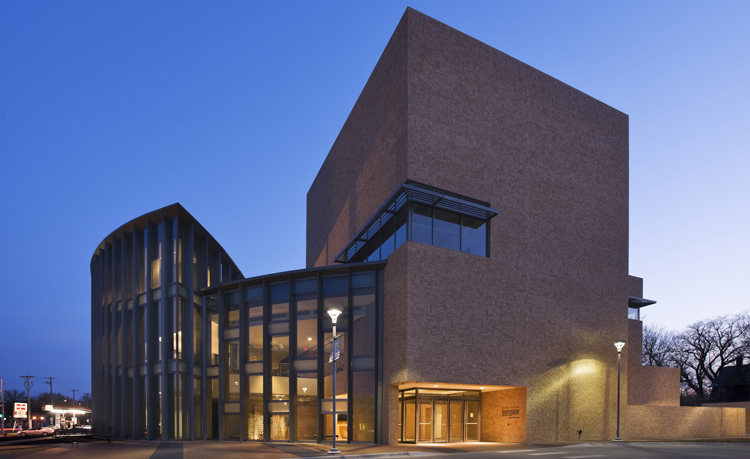
The thousands of guests from around the world who each year visit Quilt House, home to the International Quilt Study Center & Museum, now look forward to seeing even more inside thanks to planned expansion of the museum.

The Robert and Ardis James Foundation has made a $7 million gift to the University of Nebraska Foundation’s current Campaign for Nebraska for expansion of Quilt House on East Campus.

The expansion will involve an addition on the west side of the building of about 12,400 square feet and will feature new gallery space for more exhibitions as well as additional room for quilt collection storage and care, education and museum operations.

About his gift and continued investment, Robert James said Quilt House is dedicated to the people of Nebraska, to quilt lovers and to those around the world who have helped recognize quilts as true art.

“It is helping the world comprehend a previously underappreciated form of art,” James said. “That’s what it’s done, and that’s what Ardis and I always had in mind.”

In addition to funding the expansion, the Robert and Ardis James Foundation donated $1 million to establish a permanent endowment at the University of Nebraska Foundation. Annual net income from the endowment will be used to provide a stipend to the executive director of Quilt House for salary, research or program support. The director will be known as the Ardis James Executive Director of Quilt House.

“Because of the vision and generosity of Bob and Ardis James, our university has become the most important place for the scholarly study, research and curated exhibition of quilts as an international art form,” Chancellor Harvey Perlman said. “We are extremely grateful for their support of Quilt House over the years and for making another important investment.”

Pat Crews, founding director of Quilt House, said the public’s interest in the museum, its exhibitions, educational offerings and unique mission continues to grow.

“Our guests have loved what they’ve been able to experience and learn here, but they’re eager to see even more,” Crews said. “With the new expansion, we’ll have additional room for our popular exhibitions as well as increased space for our diverse collections and research. We cannot thank the James family enough for making this possible.”

University officials said the building expansion will take place once architectural studies and designs are finalized later this year and construction bids are complete.

Quilt House opened its current 37,000-square-foot building in 2008 with three exhibition galleries and state-of-the-art textiles storage as an international focal point for the study, conservation and exhibition of quilts. Robert A.M. Stern Architects of New York, with Alley Poyner Macchietto Architecture of Omaha, designed the building. The same architects will design the new addition.

The $12 million facility was funded with more than 260 contributions to the University of Nebraska Foundation, including a leadership gift from the Robert and Ardis James Foundation. More than 130 quilt guilds, as well as quilt organizations in six other countries, provided gifts toward the building campaign.

The International Quilt Study Center within Quilt House was founded in 1997 when Nebraska natives Ardis and Robert James began donating their extensive quilt collection and have since donated more than 1,000 quilts.

Ardis M. Butler James grew up in Lincoln and Omaha and married Robert G. James of Ord in 1949. They raised three children, Robert Jr., Catherine and Ralph, and made their home in Chappaqua, N.Y. Ardis James died on July 7, 2011.

Quilt House and the quilt center, whose academic home is the Department of Textiles, Merchandising and Fashion Design in the College of Education and Human Sciences, offers the only academic program of its kind dedicated to inspiring an understanding of the cultural and artistic significance of quilts and promoting the scholarly study and research of global quilt-making traditions. It holds the largest publicly owned collection of more than 3,500 quilts and is the most diverse collection in existence with representative quilts from more than 24 countries. For more information, visit quiltstudy.org.

The University of Nebraska Foundation is an independent, nonprofit organization raising private gifts to support the University of Nebraska. In 2012, donors provided $165 million for scholarships, medical and other research, academic programs, faculty and buildings. All foundation funds are donor designated. The foundation’s comprehensive fundraising campaign, the Campaign for Nebraska, has raised more than $1.2 billion and concludes in 2014. For more information, visit campaignfornebraska.org.

— Robb Crouch, University of Nebraska Foundation

For more information about IQSC, click here.